Complete vs annual vs perpetual calendar watches: explained

A complete calendar generally displays the day, date and month. An annual calendar accounts for 30- and 31-day months; a perpetual calendar also accounts for leap years. The crucial distinction is not how much information appears on the dial, but which calendar transitions the mechanism handles automatically.
A moonphase is a separate function. A watch can show day, date, month and the lunar phase without being an annual or perpetual calendar. That matters when shopping for a moonphase watch with expectations about how often it needs adjustment.

What does complete calendar mean?
Complete calendar and triple calendar are terms used for a combination of day, date and month displays. They describe the information shown. They do not, by themselves, prove that a mechanism recognises different month lengths.
Always check the calibre and its manual. For example, does the date need correcting after April? A detailed dial and an advanced calendar mechanism are not the same thing.
How do annual and perpetual calendars differ?
When correctly set and kept running, an annual calendar normally needs one correction at the end of February. A traditional perpetual calendar also handles the leap-year cycle, but is not literally correct forever: 2100 is a familiar century exception. Patek Philippe explains these distinctions in its calendar watch overview.
Also check what happens when the watch stops. A depleted battery or exhausted power reserve can leave its calendar behind. The displayed information does not remain a current calendar while the movement is stopped.
Which calendar does the Avanté Lunar have?
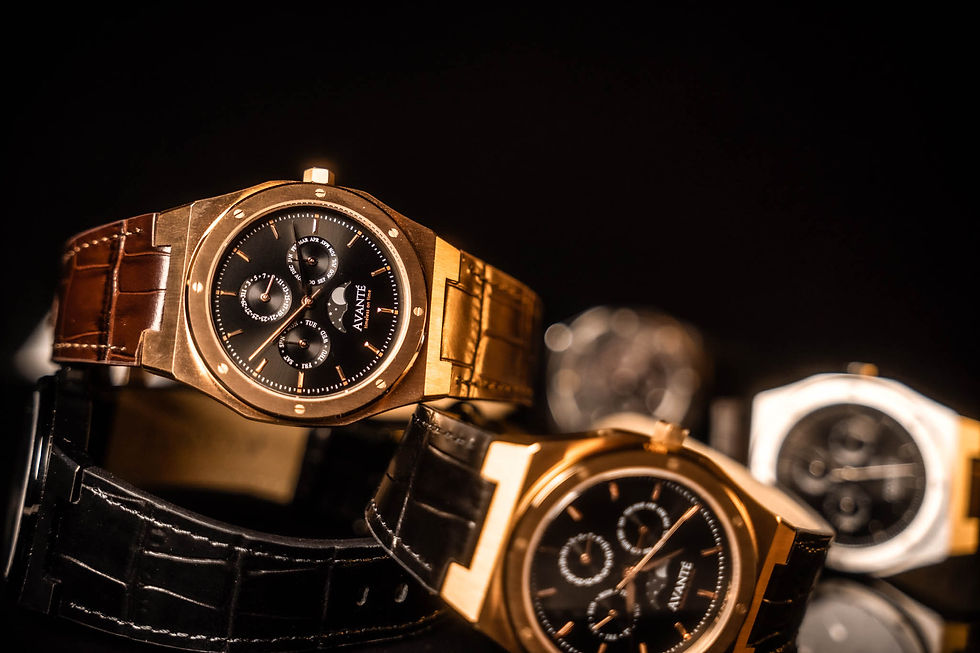
The Avanté Lunar uses the MIYOTA 6P00 quartz calibre for day, date, month and moonphase. It is not an annual or perpetual calendar. The official MIYOTA manual describes adjustments after months shorter than 31 days.
It is therefore a calendar you occasionally maintain yourself. Look beyond its three subdials and consider whether that adjustment routine suits how you wear a watch. The Lunar Silver product page shows the separate displays and full specifications.
How can you choose without false expectations?
Want to read day, date and month easily? Start with the layout, contrast and size of the calendar markings.
Want fewer calendar corrections? Look for an explicit description of the mechanism, not merely several subdials.
Rotate between watches? Read how to reset a stopped example and decide whether you are comfortable with the procedure.
Mainly interested in the moonphase? Assess that display separately from the calendar type.
Before buying, make a short note: what does the calendar display, what does it correct automatically and what must I do myself? Concrete answers to those three questions make comparisons more useful than relying on a marketing name alone.
Setting the moonphase and calendar separately
Do not assume that the correct date guarantees the correct lunar phase. At first use or after a stoppage, more than one indication may need attention. Follow the setting order and restrictions in the manual for your exact calibre.
For the Lunar, see our guide to setting the day, date, month and moonphase. Still choosing? Explore the Lunar Line or our affordable moonphase watch buying guide.
Frequently asked questions
Does complete calendar mean perpetual?
No. Complete generally describes the information displayed; perpetual describes an advanced mechanism. Always check the specific movement.
Does a moonphase make a calendar perpetual?
No. They are different functions. A moon aperture does not establish anything about automatic corrections for month length.
Will I sometimes need to adjust the Avanté Lunar?
Yes. The 6P00 manual describes calendar corrections after short months. Follow the manual for the appropriate procedure.
Are more calendar functions always better?
No. Legibility, ease of use and willingness to make adjustments are personal priorities. Choose the combination that fits your routine.
Sources checked on 13 September 2026. Technical explanation by Avanté, not a comparison of measured performance.


Comments